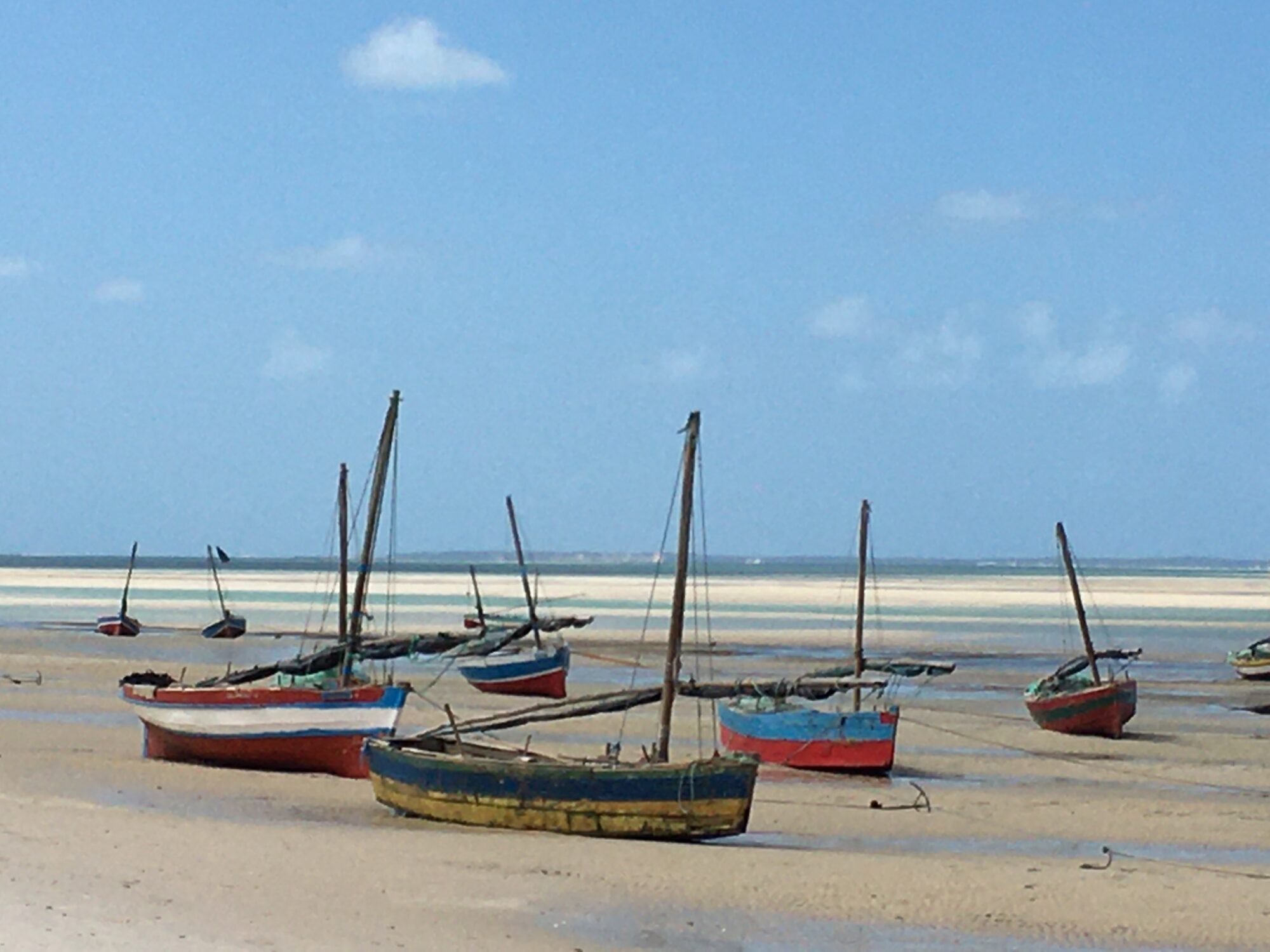
There’s a moment, usually as the tide comes in, when you look out from the beach in Vilanculos and see them coming home.
Dozens of dhows sailing in together, their sails billowing — most of them dark, almost black, patched together from whatever fabric was available.
Occasionally a splash of colour breaks through, a patchwork of reds and blues and greens.
It looks a little like a fleet from another era drifting back into port. And in many ways, it is.
A Very Old Story
The dhow is one of the oldest seafaring vessels still in active use anywhere in the world. For more than two thousand years, these elegant wooden boats have been the backbone of trade and travel along the East African coast, connecting fishing communities and linking the shores of Africa, Arabia, and the Indian subcontinent long before anyone thought to draw a map of the Indian Ocean.
The cargo they carried tells the full story of this coast — spices, ivory, gold, mangrove timber, cotton, dates, and ceramics flowed back and forth across the Indian Ocean for centuries. But the trade was not always benign. Dhows were also the vessels of the slave trade, carrying men and women from the shores of Mozambique and Tanzania to the Arabian Peninsula, for over a millennium.
Beyond commerce, dhows were vehicles of cultural exchange. The Swahili language itself — spoken today across a dozen countries — grew out of the contact that dhow trade made possible.
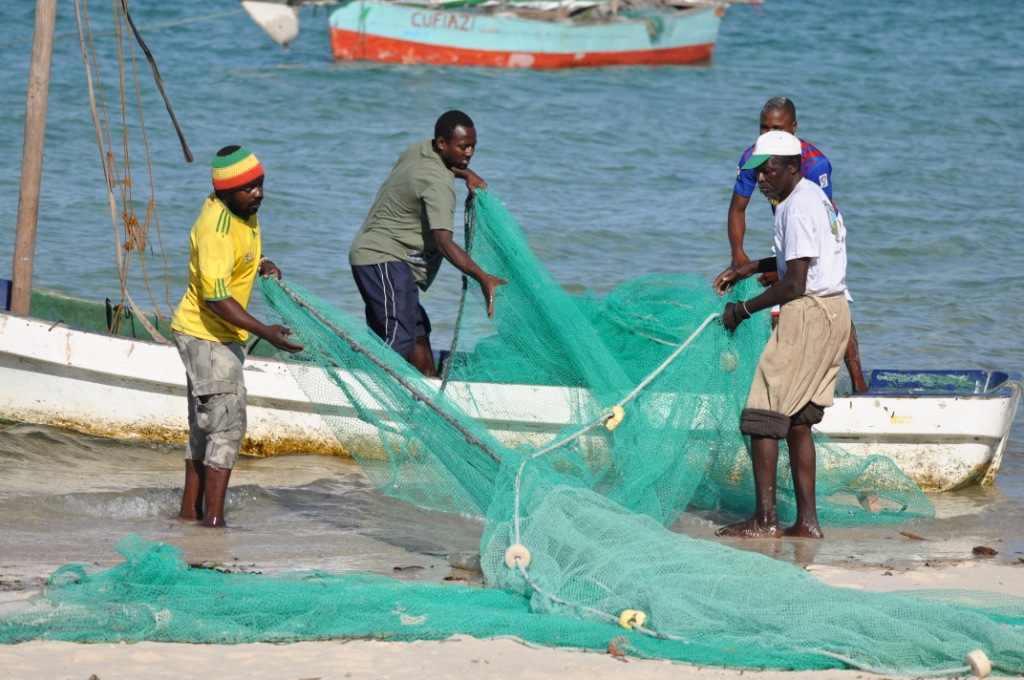
Dhows are still in use for fishing in Vilanculos.
Still Built by Hand in Vilanculos
What makes the dhows of Vilanculos so remarkable today is not just their history — it’s their present. These are not museum pieces. They are working boats, and they are still built the way they have always been built: by hand, using local hardwoods — mainly Umbila (also known as Kiiat or Wild Teak) — carefully selected for their strength and resistance to seawater.
The building doesn’t happen on the beach, as you might expect. The tides make that impractical. Instead, dhows are built in the courtyards of the fishermen’s homes. When the hull is finally complete, the whole community pitches in to push the boat down to the sea — a collective effort that feels as traditional as the craft itself.
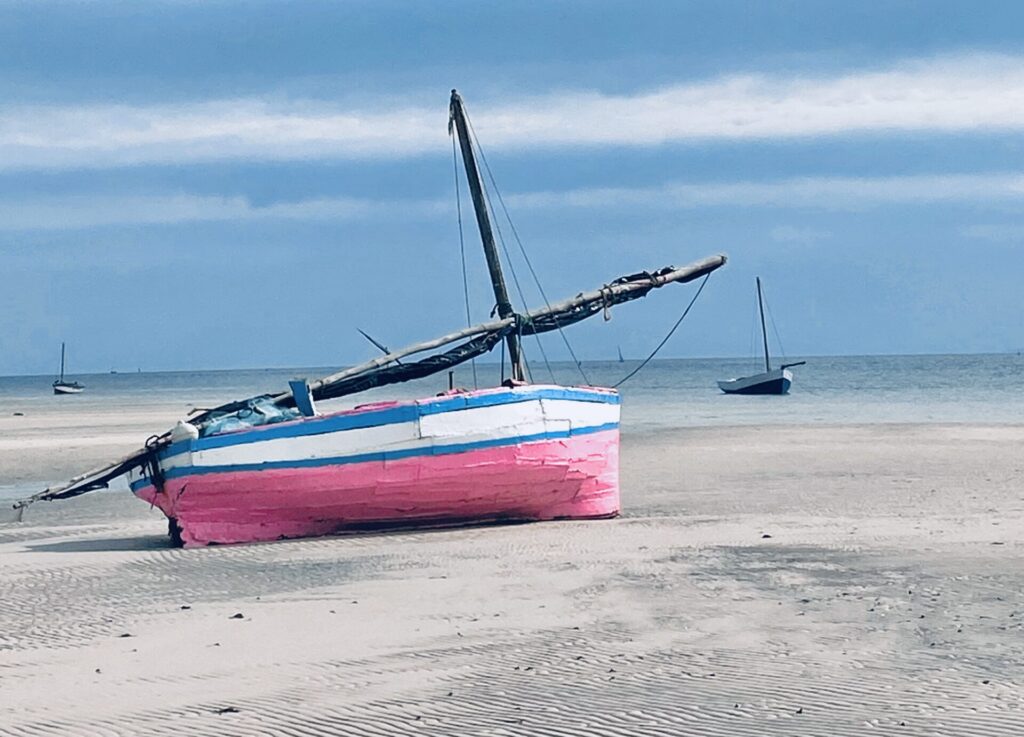
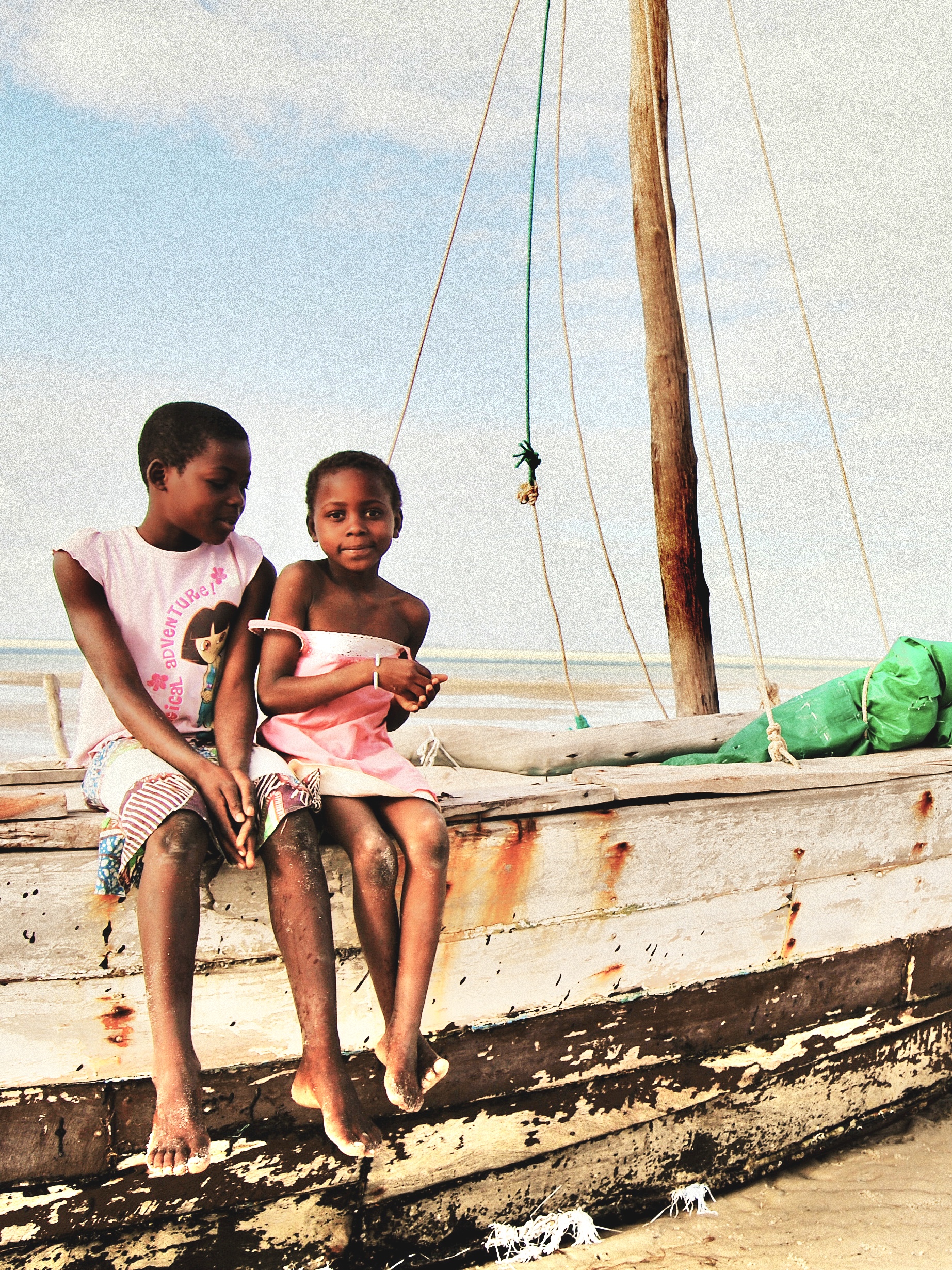
Vivid colors are often used to paint the dhows.
Low Tide: Beauty and Character
At low tide, the dhows that aren’t out on the water rest on the sand. Their painted hulls catch the afternoon light wonderfully. Up close, you notice the names. Some are practical. Some are aspirational. Some are just wonderful: BMW, God Is Good, or simply a mother’s name, painted with evident pride across the bow.
-
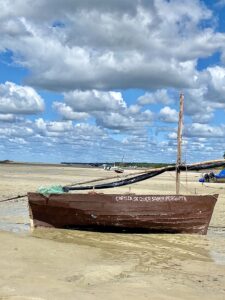
- “Cristina, if you need to know just ask”
-
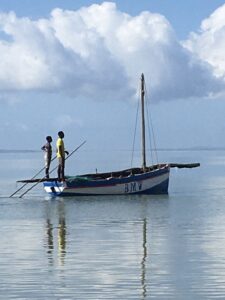
- The fastest dhow?
-
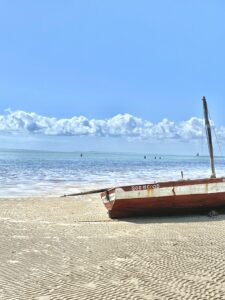
- Just like this.
The sail, known as Lateen sail, a large triangular sail slung at a 45-degree angle from a low mast, is also very distinctive. The dark, many-patched sails you see most often are not a stylistic choice; they are simply sails that have been repaired so many times that the original fabric is almost beside the point.
Getting Out on the Water: Magaruque by Dhow
The best way to appreciate a dhow is to get on one.
From Vilanculos, traditional dhows make the trip out to Magaruque Island — the closest to Vilanculos. The crossing takes roughly an hour depending on the tides and wind, and the experience of sailing on a traditional vessel across water this clear and this blue stays with you.
Watch the crew prepare part of the lunch that will be served on the island. Just like fishermen still do when they leave for a few days, they cook directly on the boat, using an iron pan cast into the wood of the dhow, burning charcoal to grill a fresh fish and prepare a meal right there on the deck.
A Living Heritage in Mozambique
The dhows of Vilanculos are at the heart of Vilanculos’ maritime culture. Ongoing, practical, and very much part of daily life here.
Whether you’re watching them come in on the tide, photographing their hulls at low tide, reading the names on their bows, or climbing aboard for the crossing to Magaruque, they’re one of the best things about being here.
Sabrina
Owner of Casa babi & Odyssea Dive
Sabrina, of French and Italian heritage, has been living in Mozambique since 2007. Owner of Casa Babi Guest house and Odyssea Dive center in Vilanculos, having traveled extensively throughout Mozambique and Southern Africa, Sabrina aquired extended knowledge and informed insights into the region throught the time.